Custom Golf Accessories Manufacturer and OEM/ODM Factory
Custom Golf Accessories Manufacturer and OEM/ODM Factory

In 2026, tournament organizers, golf clubs, sponsors and brands are using merchandise to create a more complete event experience. Products are expected to look premium, feel useful and carry a story that participants will remember after the final round.
The Association of Golf Merchandisers identifies several changes shaping modern golf retail, including premium accessories, hyper-customization, experiential tournament gifting, lifestyle-oriented products and cross-category merchandising. These trends are also visible in the official merchandise collections offered by major golf organizations.
Here are the most important golf tournament merchandise trends buyers should consider in 2026.
One of the strongest trends is merchandise designed around the identity of the tournament.
Instead of placing the same logo on every product, organizers are developing complete visual themes based on the host course, local culture, tournament history or destination. Colors, embroidery patterns, packaging and product details can all work together to tell the same story.
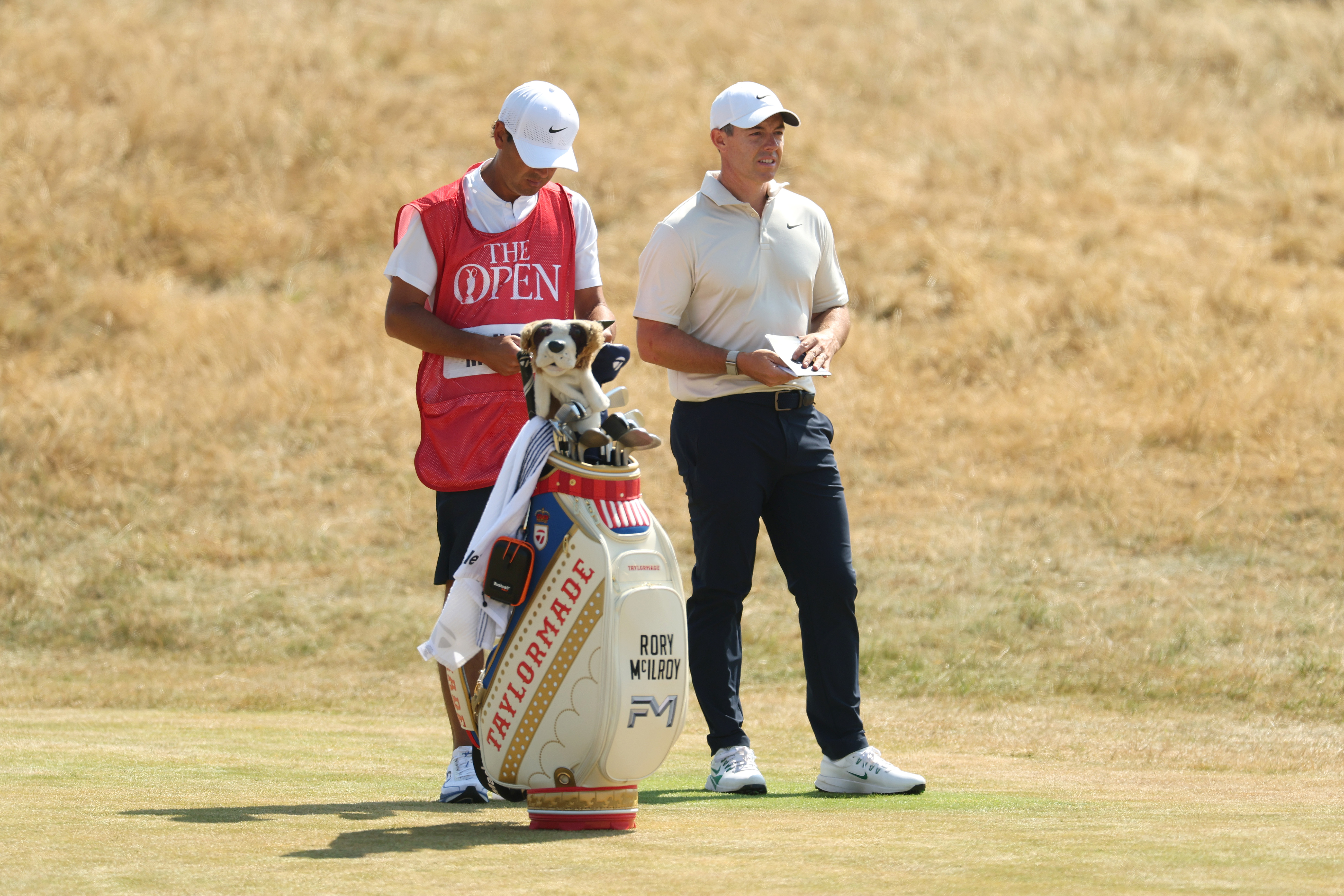
A recent example is TaylorMade’s 2026 Open Championship collection. Its golf bag and matching headcovers were inspired by Southport and Royal Birkdale, incorporating local seaside references and small design details connected to the destination. This shows how tournament products can become conversation pieces instead of ordinary promotional items.
For smaller events, the same idea can be applied without a large budget. A club championship could use colors from the course landscape. A coastal tournament might use wave, lighthouse or links-inspired patterns. A charity event could build its collection around the organization’s mission.
The goal is to create merchandise that feels specific to that event.
Golf caps continue to be one of the safest and most visible tournament merchandise choices.
They can be worn by players, caddies, volunteers, staff members, sponsors and spectators. Unlike some traditional promotional gifts, a well-designed cap can also be worn long after the tournament has finished.
Popular options in 2026 include:
Official championship shops continue to give headwear a prominent position alongside apparel and other accessories. The official USGA shop, for example, offers annual event-related hats and limited-edition merchandise inspired by championship branding and host locations.
For tournament buyers, comfort is just as important as appearance. Moisture-wicking sweatbands, breathable panels, adjustable closures and lightweight materials can increase the chance that participants continue wearing the cap.
Tournament buyers are placing more attention on products that golfers can use during the event.
Golf towels, headcovers, gloves, ball markers, divot tools and golf balls have a direct connection to the game. They are easier to integrate into a tournament package and usually provide stronger long-term brand exposure than an unrelated promotional item.
Current PGA Championship merchandise categories include golf towels, golf balls, drinkware and headcovers, showing the importance of practical accessories within official tournament retail.
Popular tournament accessory choices include:
Microfiber and waffle-texture towels are lightweight, easy to customize and useful throughout the round. Magnetic towels are also becoming attractive for premium events because they can be attached conveniently to a golf cart or club.
Driver, fairway, hybrid and putter covers provide a large area for creative design. Event organizers can use embroidery, printing, appliqué, quilting or premium PU leather to create a collectible product.
Custom gloves work well for player gifts, sponsor packages and team events. Buyers should confirm hand orientation, size distribution, material, closure design and logo method before production.
These products are compact, affordable and easy to include in registration packs. Magnetic hat clips, poker-chip markers and metal divot tools can also be presented together in a custom gift box.
The most successful products balance branding with real usefulness.
Another major shift is the move from individual promotional items to coordinated tournament collections.
Instead of ordering a cap from one supplier, a towel from another and a gift box from a third, buyers are increasingly looking for products that share the same colors, artwork and logo treatment.
The Association of Golf Merchandisers describes this as cross-category merchandising: grouping apparel and accessories around a unified color story or lifestyle theme rather than displaying unrelated products separately.
A coordinated tournament collection could include:
This approach creates a stronger visual identity and makes merchandise easier to display at registration areas, pop-up shops, prize tables and club retail spaces.
It can also reduce communication costs when one manufacturer manages the materials, colors, logo files, sampling and production schedule across several product categories.
A large printed logo is no longer enough to make tournament merchandise feel valuable.
Premium products often use more subtle branding supported by better materials and craftsmanship. Tonal embroidery, small woven labels, embossed leather patches, metal badges and custom inner linings can provide a more refined appearance.
Golf retail is moving toward higher-texture and more premium accessory categories, especially in headwear, leather goods and lifestyle products.
Tournament buyers should consider details such as:
These details help turn an ordinary giveaway into an item that participants want to keep.
Limited-edition merchandise gives an event a sense of exclusivity.
The official USGA store releases new collections linked to individual championships, including limited-edition apparel, headwear and collectibles inspired by the host venue and tournament identity.
This model can also work for corporate tournaments, club anniversaries and charity events.
Products can be marked with:
A numbered putter cover, special-edition cap or commemorative gift set can feel more meaningful than a standard mass-produced item.
However, buyers should avoid ordering more limited-edition merchandise than the event can realistically sell or distribute. A smaller, carefully planned collection often feels more exclusive and reduces leftover inventory.
Standard tee gifts are gradually being replaced by more flexible gifting experiences.
Some tournaments allow guests to choose from several products, select a preferred color or receive different gift levels based on registration type. The Association of Golf Merchandisers describes this change as experiential tournament gifting.
For example, an event could offer:
Giving participants a choice can improve satisfaction and reduce the number of unwanted items.
For manufacturers, this means production planning must support multiple colors, sizes and logo options without making the ordering process too complicated.
Golf participation continues to become more diverse.
According to the National Golf Foundation, more than eight million female golfers played on a course in the United States in 2025, accounting for 28% of on-course golfers. Just under four million juniors also played on a course, with junior participation increasing significantly since 2019.
Tournament merchandise should therefore not be designed around one traditional customer profile.
Buyers should consider:
Offering a broader selection can help tournaments reach players, families, spectators and younger golf consumers.
Many golfers now expect products that work on the course but also look appropriate in daily life.
A tournament cap may be worn during travel. A quarter-zip can be used at work. A golf tote or shoe bag may become part of a weekend wardrobe. Headcovers can also act as decorative items that express personality inside the golf bag.
This is why modern tournament merchandise often combines performance fabrics with cleaner, more lifestyle-oriented design.
For buyers, the product should not look like a temporary promotional item. It should look like something that could be sold in a professional golf shop.
Before requesting a quotation, tournament organizers should confirm several basic details:
Determine whether the merchandise is intended for players, sponsors, staff, volunteers, VIP guests, spectators or retail customers.
Separate registration gifts, staff products, prizes and VIP gifts. Not every item needs the same material or packaging.
Prepare the event logo, colors, patterns and preferred decoration methods before sampling begins.
Different products may have different minimum order quantities. Confirm the expected number of participants and include a reasonable reserve.
Custom colors, embroidered logos, metal accessories and gift packaging may require additional development time.
Confirm whether products will be packed individually, arranged in gift boxes or delivered in bulk for on-site distribution.
Early planning gives the manufacturer enough time to control colors, materials, logo placement and quality across the full collection.
The strongest golf tournament merchandise in 2026 is useful, recognizable and connected to the event.
Custom caps, headcovers, towels, gloves, bags and golf gift sets remain important categories, but the way they are designed is changing. Buyers are placing more value on local storytelling, coordinated collections, premium materials, subtle branding and flexible personalization.
A successful tournament collection does more than display a logo. It helps participants remember the course, the people and the experience.
Near Long Golf provides one-stop OEM and ODM customization for golf caps, headcovers, gloves, towels, golf bags, apparel and golf accessory gift sets. From product design and logo development to sampling, production and packaging, we help golf brands, clubs, distributors and tournament organizers create coordinated merchandise collections for their markets.
Planning your next golf tournament collection? Contact us to discuss your products, quantity, logo and delivery schedule.

